

Search, excavation, rescue of survivors, relief distribution, and various assistance activities are underway for those who lost their lives in the Bhotekoshi flood that came from Tibet to Rasuwa on Bhadra 10. Although the districts most affected by the flood are Rasuwa, Nuwakot, and Dhading, the focus of the entire country and foreigners is still around the Bhotekoshi flood.
The flood has caused havoc in the area where the Bhotekoshi and Trishuli floods originate, from Rasuwagadhi in China to the Ganges in India, where the river ends. Along with the havoc, human bodies have been swept away, in the form of dead bodies. The flood, which is said to have reached Rasuwa in seven minutes from the Lhende River, its origin, and which is said to have surged at a speed of 150 km per hour, did not take even a minute to destroy the surrounding human settlements and cultivated fields. As a result, most of the houses that were touched by the flood were washed away, damaged, and all those who could not run away with their homes were taken away. Villages and places with human settlements are now deserted and look terrible. Most of the human structures have been covered with soil and turned into plains, as if nothing was there.
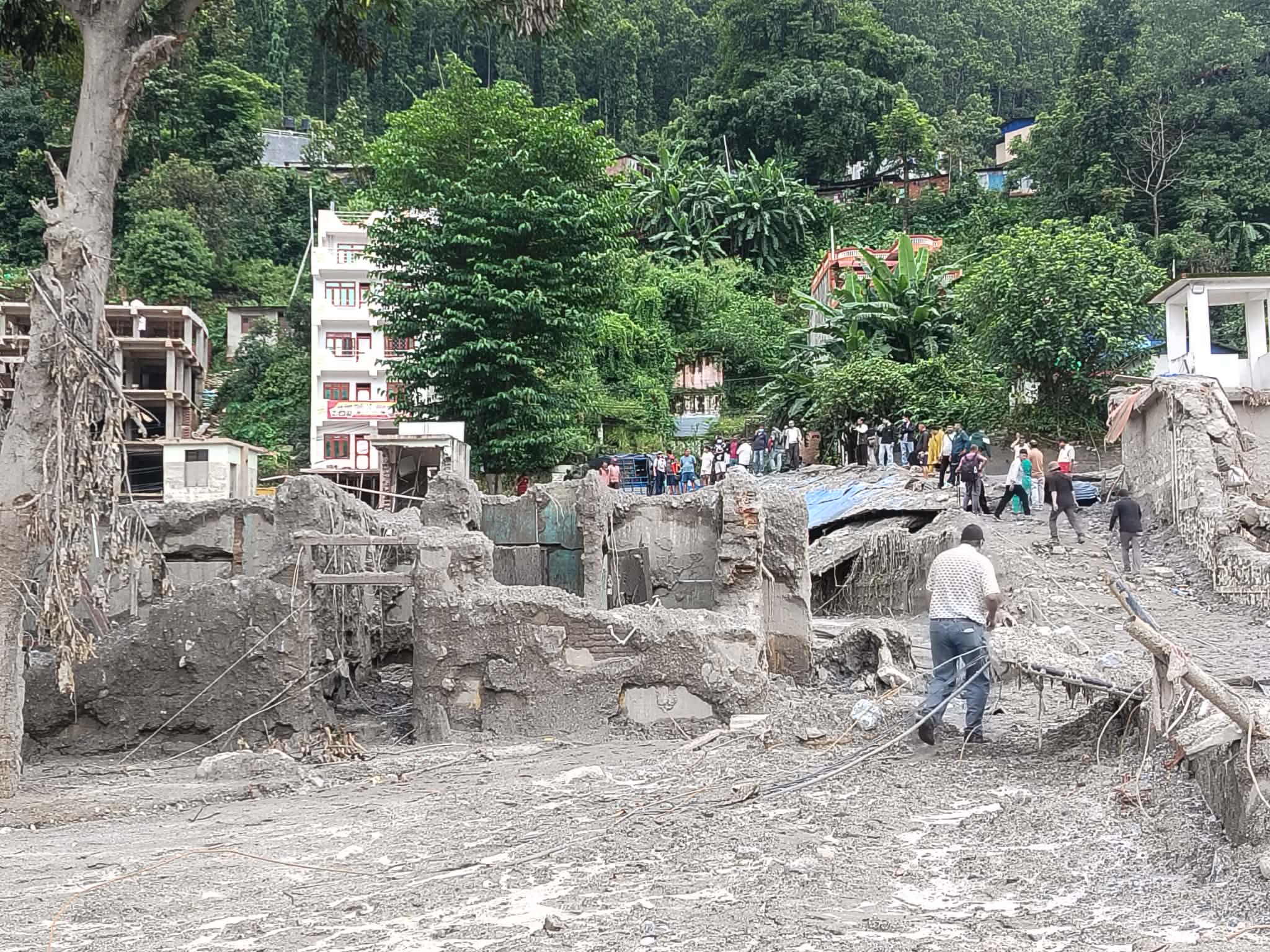
But the fact that many things, humans and animals have been buried in the ground seen in those plains is also confirmed by the sight of dogs sniffing in places and the head-aching stench. During a visit to the hydropower project area with solar panels in Dhunge, Devighat, and Battar in Nuwakot from Bhadra 15 to 17, many such scenes were seen. National Agricultural Modernization Program, Program Implementation Unit, Nuwakot building, a dog that was scratching its feet on the stone, which was not visible from above, sniffed the ground and sat down, probably sensing that there was something underground. Such scenes were also seen in Devighat.
The death toll from the Bhatekoshi flood has reached 1,331 today, Bhadra 20. According to the search, rescue and relief update released by the National Disaster Risk Reduction and Management Authority as of 12:00 PM on Bhadra 20, 2083, this number of human losses has been reported in various flood-affected districts. The number of bodies identified and recovered so far is 96. It is not known where and how many people will be affected. According to the statistics, the directly affected population is 32,963, while the number of people who have lost contact is about 5,000, according to the authority.
Not only have the settlements along the riverbanks of the flood-affected areas been devastated, but the residents of the safe settlements above the riverbanks are also under a lot of stress. Most of them have closed their houses and shops and moved elsewhere, fearing that something might happen, while some have sent their children and elderly people to Kathmandu and other places considered safe. The limited hotels that were open have accommodated the crowds of national and international relief workers, various NGOs, international NGOs, disaster tourists, and media personnel. Unable to find a place to stay, our group had to go to Chhare, 18 kilometers from Battar, on the border of Shivpuri. However, rather than having to go far, everyone was happy that it rained in Battar in the evening and that they did not have to stay on the banks of the river in the market. Everyone was happy that they could sleep peacefully at night.
While staying, we learned that 14 relatives of the hotel owner were missing. The girl who helped us at the hotel said, "My maternal uncle and aunt's family of 14 people and many people who worked at Dhunge's motorcycle workshop are missing. Since my uncle's children have only been in America for three months, they have not been reported missing." They are not allowed to come because they have only gone for a short while, and I am confused because I have lost my mobile phone.’ Initially, she had posted on social media that her family was missing, but when other family members asked her not to, she removed it and asked me not to mention her name or take a photo.
Asmita Ojha, who lives in Battar, Hawaghar, upstream of the Devighat Hydropower Station on the banks of the Trishuli, has a new house built on the slope. But she has shifted her children and mother to another place for safety, fearing that the flood will do something again. Her husband is working abroad.
Binamaya Tamang, 13, from Khalte, Rasuwa, and her seven-year-old brother escaped from the road while they were walking to school, but four people in the house, including her parents and siblings, are missing. Bina, who has been living in a holding center in Nuwakot, says, "I went up the hill and asked for a brother's phone to make my parents call, but they didn't get a call, there is no news yet. My aunt has taken my brother to Kathmandu, I am here." Since most of the houses in Khalte have been turned into fields and other neighbors who managed to survive are also in the holding center with her, she has assumed that her parents and siblings are no longer in this world. Her aunt, who is in Kathmandu, has come to visit her twice.
Secret Holding Centers
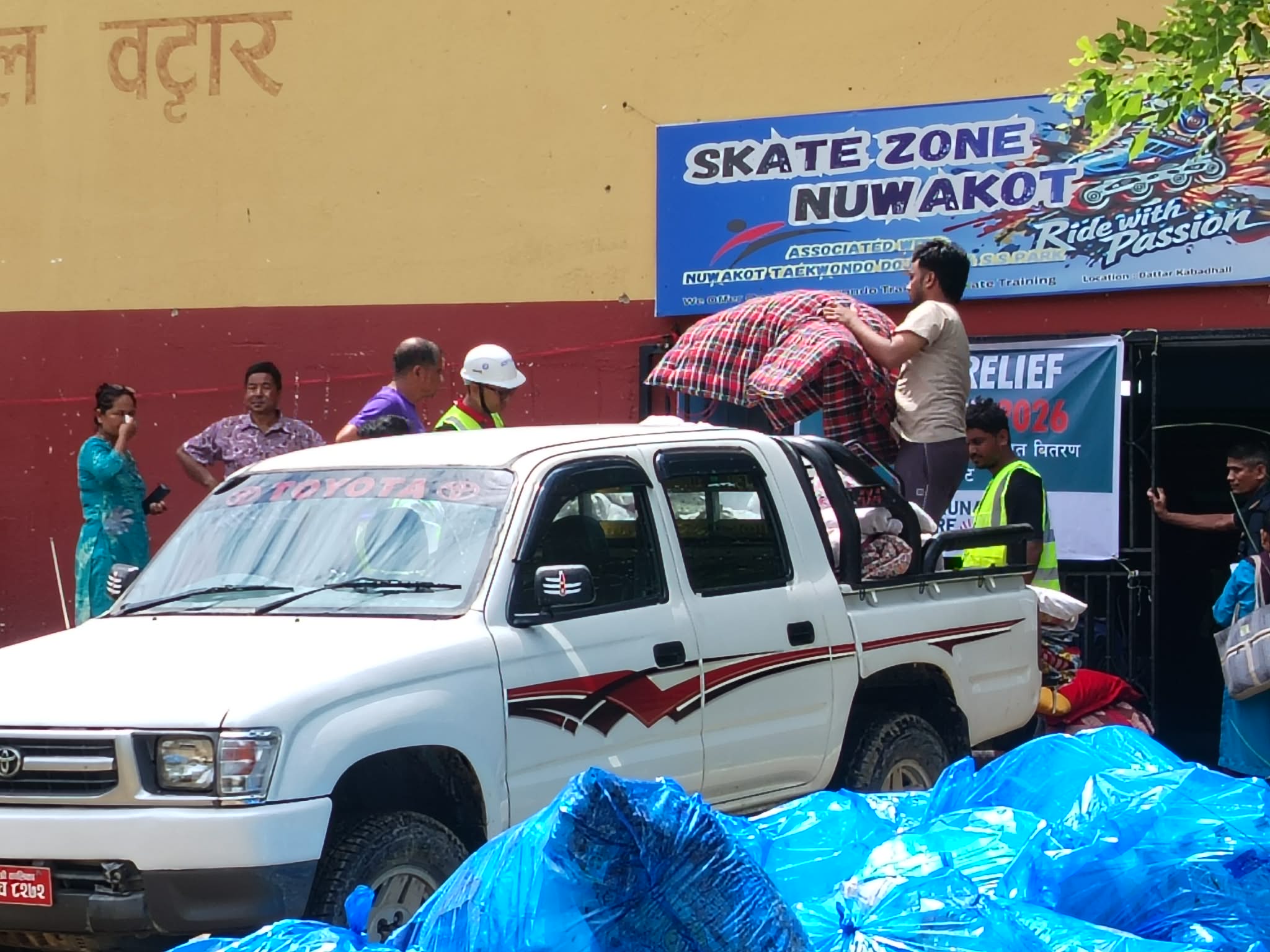
The shelters prepared by the government and locals for those who lost their homes due to floods are second homes. According to the Disaster Risk Reduction and Management Authority, 4,627 of the rescued and affected people on Bhadra 20 are currently in 37 holding centers. As of yesterday, there were 3,181 in Nuwakot, 199 in Dhading, 1,141 in Rasuwa, and 387 in Kathmandu. These figures fluctuate daily.
Out of the 19 holding centers in Nuwakot, in some of the holding centers, flood victims take the initiative to cook rice, pick vegetables, cook, and eat. It is found that some holding centers have been made very mysterious. Among the various holding centers in Battar observed on Bhadra 15, 16, and 17, the Taekwondo Covered Hall and Tamang Plaza Holding Center operated by Karuna Care were found to be very hospitable to those who came for external monitoring.
After a week of being crammed into one hall, men, women, and children were left without a place to bath or change clothes. When I reached there on the fifth day of the flood and on Bhadra 15, Dhanraj Ghimire of the holding center replied to the complaints of women's rights activists that a tent had to be arranged for women to change clothes, "I told yesterday when the minister came, now I only have to tell Prime Minister Balen Shah." There is a large courtyard outside the covered hall, and there is plenty of space outside the Tamang Plaza holding center to pitch a tent, but there was no readiness to change women's clothes.
Those who tried to enter the holding center were not allowed to enter, were not allowed to look inside, were asked why they were looking inside, and when they tried to get any information, the flood victims of the center refused to talk, and were asked why they were talking even though they were ready to talk. Most of those who visited the holding center commented that the behavior of the holding center was not very positive.
Even when taking photos and videos of flood victims being examined outside the hall, health workers protested, asking why they were taking photos. Everyone has seen and understood the havoc caused by the Bhotekoshi flood, which has spread across social media and has become global through the media and social media itself. People who have not been able to reach there are curious about what happened and what is happening. It is the job of the mass media to quench this curiosity.
After the Bhotekoshi flood, mothers, children, families who have lost their children, and other vulnerable citizens are taking shelter in the holding centers of Nuwakot and Rasuwa.
It is an important responsibility of the media to make the reality of the disaster public. Respecting the privacy, security, dignity, and mental sensitivity of the victims is an even more important responsibility of journalism. It is also the duty of journalism to make public information about whether they have received proper protection.
Minister of Communications Bikram Timilsina himself, in a statement on the 19th titled ‘Bhotekoshi Disaster: Request for Responsible Journalism’, has urged media colleagues not to enter the holding center without coordination with the concerned bodies, not to take/make public pictures or details that reveal the identity of children and other sensitive persons without consent, and to report in a way that does not hinder the rescue and relief arrangements.
On the other hand, in the holding centers operated by Shree Bidur Pitrumokshadham (Kriyaputri) Welfare Organization in four houses in Bidur Municipality-2, separate arrangements were made for men and women in separate rooms, and for teenage girls. While there was a provision of a mattress and a bed, some rooms also had cots, while teenage girls living in rooms with televisions complained that they were unable to watch television due to the lack of Wi-Fi. Teenage girls complained that they had trouble taking a bath because they did not have shampoo, and that they had to wait for hours even when they went to take a bath due to lack of water. Deepak Timilsina, President of the holding center, said that when the water source of the Tadi river was cut off due to the flood, hundreds of people had to bath and wash themselves in the stone stream at the head of the main stream of the Shree Bidur Pitrumokshadham (Kriyaputri) Welfare Organization, which took a lot of time.
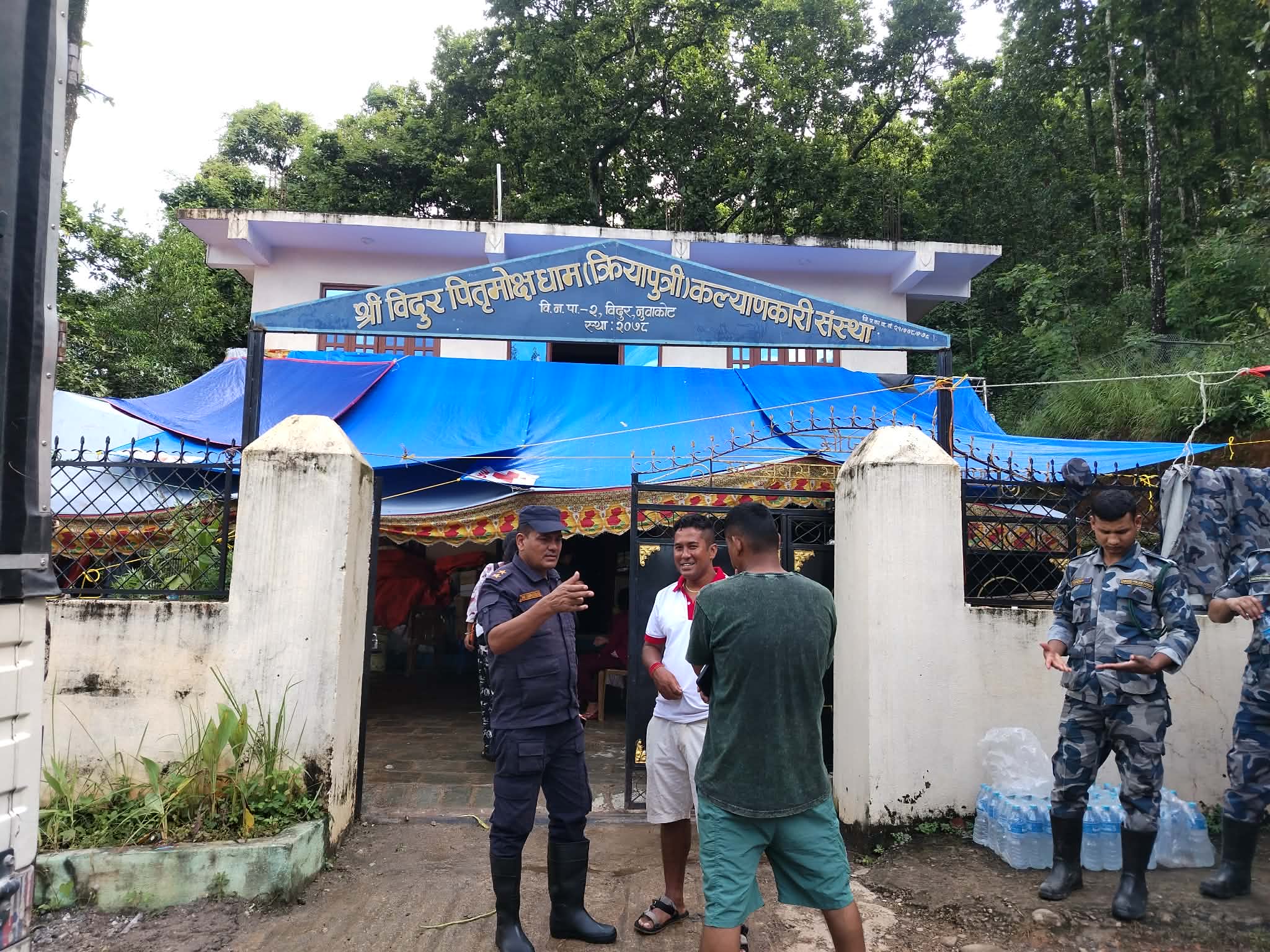
Their current routine is to collect relief items such as clothes, food, and soap from various relief distributors and put them in bags. According to Deepak Timilsina, President of the Shree Bidur Pitrumokshadham (Kriyaputri) Welfare Organization, food and snacks have been arranged for the flood victims twice a day. People from the elderly over 100 years old to two-year-old children have been staying at this center. However, when I went, the child had a fever and was lying down, while his father was applying water bandages. He said that they were giving him medicine prescribed by the doctor who came to the center. According to the child's mother, Ashika Tamang, they had a house in Rasuwa village and were living in Betravati. But after the house they were staying in was washed away, they had to walk to Nuwakot for a day as the accommodation arrangements at the holding center there were not good.
Some of them were found to be staying at the holding center without any effect, even though they were at home. Similarly, there were complaints that they could only look after their own area while there were many people who had come from outside to work and were asked to leave the holding center.
Five people have played a managerial role in this holding center, and a manager, Sunil Shrestha, has been given the responsibility of monitoring and updating the residents of each house. According to Shrestha, the clothes brought for distribution have been distributed in four phases (up to Bhadra 16) according to age. The flood victims who came to the holding center in their clothes expressed satisfaction that they received clothes to change into after arriving there.
Regarding relief
Materials have been coming in from all over the country and abroad for relief distribution. However, they had said over the phone that the work of bringing some relief was affected after the roads in various places including Krishnabhir highway damaged. It has now been decided that the relief that was centralized in the name of a single-door system will now be distributed locally. This seems to make it easier to reach the victims living outside the holding center.
It is said that the relief brought nationally and internationally has increased, but in reality, it is a lack of management. Until another management is done, that relief is the best solution for the time being for those living in the holding center and those who have become victims even while living outside. And, the government should manage it systematically in a timely manner. Various organizations have arranged free food and water for flood victims and relief workers along the way to Battar Bazaar.
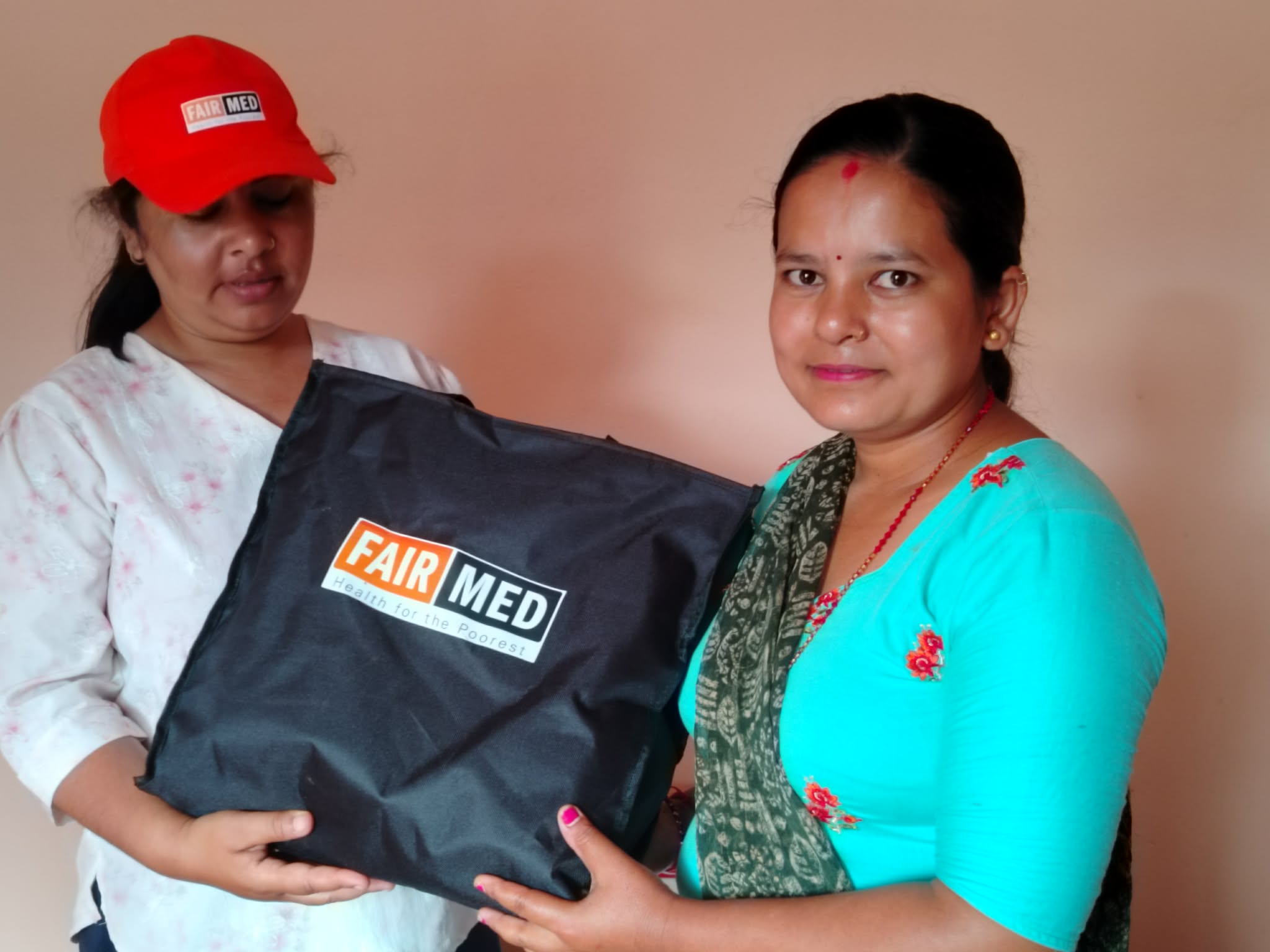
International organizations such as UNICEF, Save the Children, FAIRMED, World Vision, and Plan International said that they have made a long-term plan and are moving forward. As informed in a coordination meeting with international NGOs at the Nuwakot District Administration Office, UNICEF has made a long-term plan and has prepared child-friendly spaces, tents, nutritional materials, and health-related materials for 50 children who have lost their parents. UNICEF has collected enough materials for 50,000 families.
Similarly, FAIRMED, an international non-governmental organization working in the health sector, aims to distribute health materials to flood victims immediately and work in the long term, said Keshav Dutta Bhatta, the organization's Nepal representative and emergency response coordinator. The organization, which has been working in 11 districts of the country, has run a health relief program for victims displaced by the Bhotekoshi flood. According to Emergency Response Coordinator Keshav Dutta Bhatta, the organization will work in Rasuwa, Nuwakot and Dhading through the Mahila Aatmanivar Kendra (MANK), Sindhupalchowk. The organization has stated that it aims to work in the areas of health supplies, food and sanitation for the time being. Many women at the holding center had the same complaint – many bring clothes to wear outside, but there is also a problem if there are no panties and bras to wear inside.
Blue zinc-roofed house
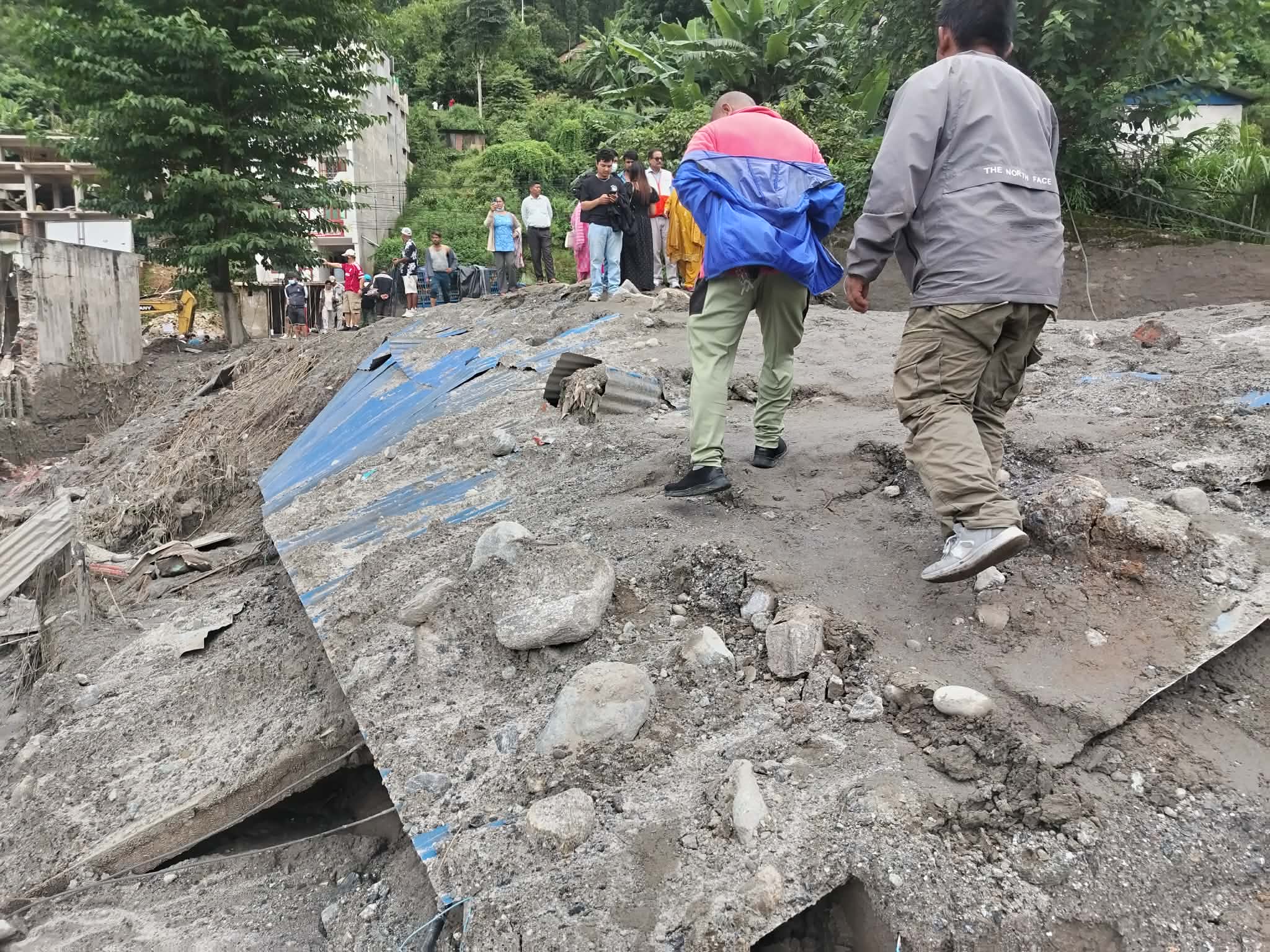
The high devastation of the flood can be seen on the rocks of Nuwakot Bidur. Most people who reach Nuwakot Bidur go here to take photos of the houses that have been swept away by the flood and taken a shapeless shape, and they go ahead to the banks of the Trishuli River with the desire to make videos. Those who try to reach the river through frequent floods, muddy soil left by the floods, and swampy soil are buried in the soil, and they all go to the right of the Agricultural Development Bank and the jail house and a zinc-roofed house along the road. If the house is overloaded and the roof of the house is broken or the wall collapses, another accident may occur. Since it is on the road surface and there is no fence along the road, it seems that the local administration should arrange a fence there.
The devastation and stench of Devighat
The scene of the elderly people in the old age home in Devighat being swept away by the flood and their rescue was very tragic. When I saw that scene, I thought that the elderly people should have been rescued in time. But after going to that place, I realized that the flood had entered an unexpected place. The flood of the Trishuli river, which is far away from the old age home, had turned the water into a pond and covered the old age home.
The house of elderly Sharada Gajurel, who was living in the holding center of the Ayurveda and Alternative Hospital, Lower Pipaltar, Nuwakot, was washed away. Devighat's Sharda, who built a house with the money her son earned by working in Dubai, was swept away by the flood, saying with emotion, "My son's life's earnings are gone, how can I build it now?" When the flood hit, she had gone to the temple to pray for the family. But when she returned from the temple and tried to cross the Trishuli Bridge, "the security personnel stopped her at the other end of the road." That same day, her daughter-in-law, who lives in Kathmandu, called her repeatedly, but she did not answer the phone, so she was unaware of the news.
While sitting together at the holding center, she said, "My neighbor said your house washed away like a lamp in a river, and it did not damage it at all," and said, "I have had to endure so much pain in this life. Even God did not see it. May I forget the sad days." My son lost everything he had earned in 20 years in one fell swoop.’ Sharada, who had stopped eating after losing everything in the flood, said that she started eating only on the 16th after realizing that she could not cause further pain to her daughter-in-law. Sharada, who was eager to speak out and wanted everyone to know the pain she had suffered, repeatedly broke down while recounting her ordeal.
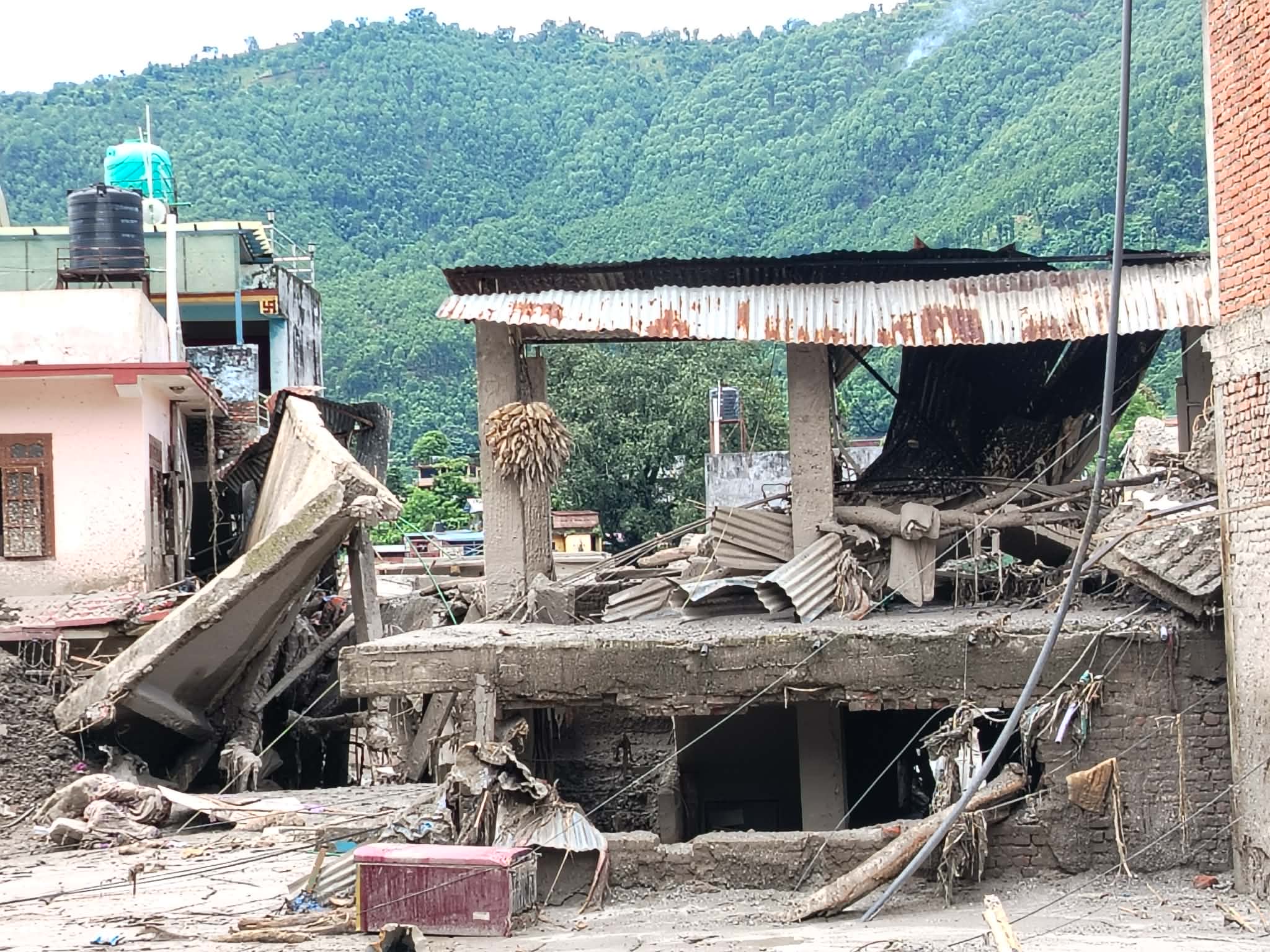
No house is intact in Devighat. The houses, which were submerged up to almost two floors, are completely covered with mud and mud. Even the houses with pillars were in a state of collapse, with some walls collapsed and some of them were in a state of disarray. The shutters were bent and broken, and the belongings were washed away.
Ramsharan Rimal, a teacher found in Devighat, had come to collect his belongings on Bhadra 16. Many of Rimal's belongings, who had rented three rooms on the second floor, were wet. Ramsharan, who was shoveling dried mud and putting his belongings in a taxi, said that he had rented a room in Battar Bazaar and was going to take his belongings there. He also said that he had rescued 40 children from the school.
A woman found in Devighat said that she had come to see her brother's house but could not enter the house due to the stench spreading there. According to the woman who lives in Battar, her brother, who is employed abroad, had only purchased the house some time ago and had not been able to enter the house after purchasing it.
After the devastation caused by the flood, most of the people who were on the second and third floors and had come to collect their belongings said that it was no longer possible to live in the place and they did not see any solution.

More from Amika Rajthala



Comments (0)
No comments yet
Be the first to comment!
Write a Comment